
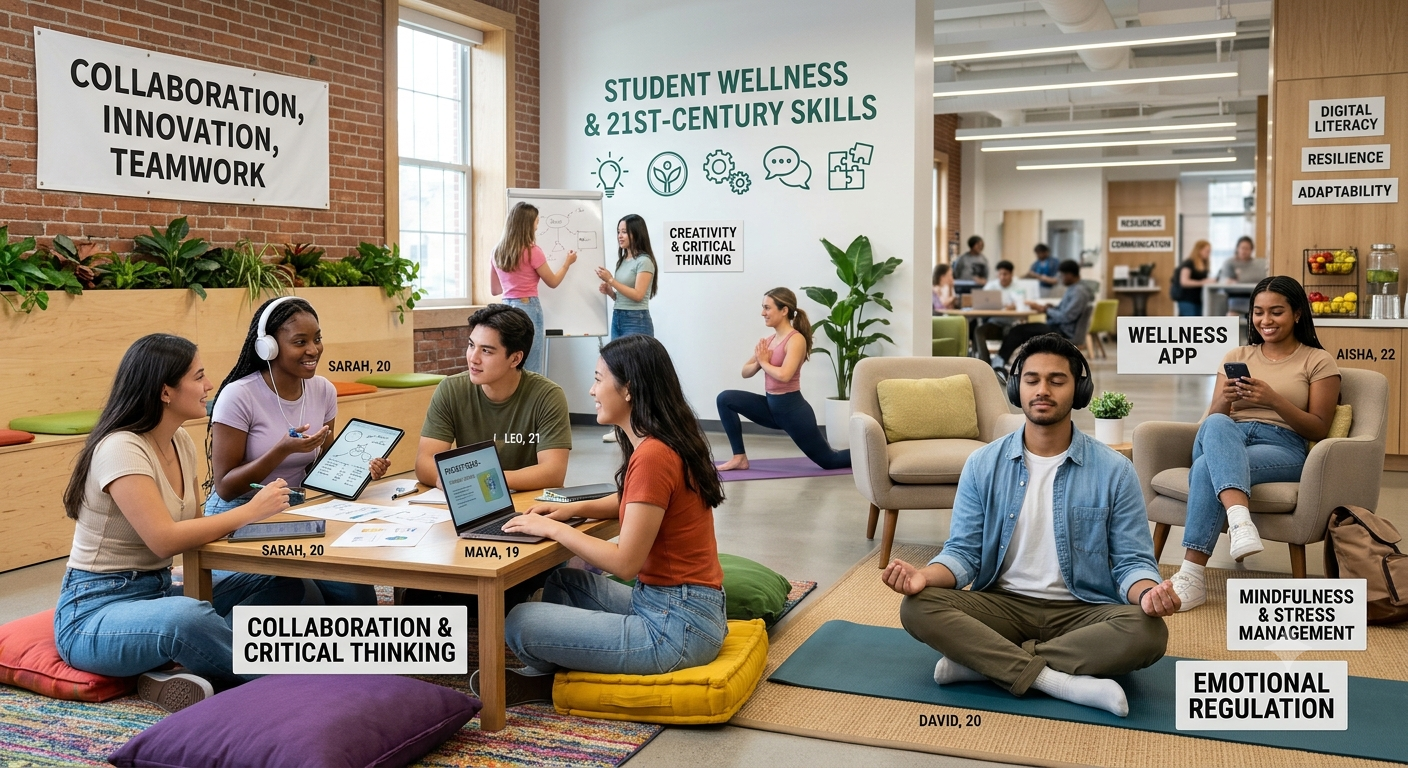
STUDENT WELLNESS & 21ST-CENTURY SKILLS: BUILDING A HEALTHY MIND AND A SUCCESSFUL FUTURE
Introduction: Being a Student Is More Than Just Studying
Have you ever felt stressed because of exams, confused about your future, or worried after seeing someone else achieve something you are still working towards? Have you ever thought, “Am I doing enough? Will I get good marks? What if I fail? What will happen to my career?”If your answer is yes, you are not alone.
Student life is one of the most important phases of life. It is a time to learn new things, discover interests, make friends, build confidence, and prepare for the future. But today’s students face many challenges that go beyond textbooks and examinations.From academic pressure and social media distractions to career confusion and competition, students have a lot to manage. In such a situation, two things become extremely important: Student Wellness and 21st-Century Skills.
Student wellness helps you take care of your physical, mental, and emotional health, while 21st-century skills prepare you to face real-world challenges.Both are equally important because a successful future does not depend only on good marks. It also depends on how well you understand yourself, communicate with others, solve problems, manage challenges, and take care of your well-being.
Let’s understand how these two things can make student life healthier, happier, and more successful.
1. What Is Student Wellness?
Student wellness means maintaining a healthy balance between studies, physical health, mental health, emotions, relationships, and personal development.It is not just about being physically healthy. It also means feeling confident, staying emotionally balanced, managing stress, and creating a positive environment for yourself.Imagine a student who studies for 10 hours every day but gets very little sleep, never takes breaks, and constantly worries about marks.
Even if this student spends many hours studying, their overall well-being may suffer.Now imagine another student who follows a balanced routine, studies regularly, gets enough rest, enjoys hobbies, and takes care of their health.The second student is developing habits that support both learning and well-being.
Remember: Your health is not separate from your education. It is an important part of your success.
2. Five Important Areas of Student Wellness
Student wellness includes different aspects of life. Let’s understand them one by one.
A. Physical Wellness
Physical wellness means taking care of your body so that you have enough energy to manage your daily activities.Students often ignore their health because of homework, tuition, examinations, and deadlines. Some skip breakfast, sit for long hours, or spend too much time using mobile phones.These habits can affect concentration and energy levels.
Simple ways to improve physical wellness:
- Eat balanced and nutritious meals.
- Drink enough water throughout the day.
- Include regular physical activity, such as walking, cycling, or playing outdoor games.
- Maintain a regular sleep schedule.
- Take short breaks during long study sessions.
- Avoid spending unnecessary hours sitting in one position.
For example, if you feel sleepy while studying, instead of forcing yourself to continue, take a short break, drink some water, and move around.Small healthy habits can make a meaningful difference.
B. Mental and Emotional Wellness
Mental and emotional wellness means understanding your feelings, managing everyday stress, and maintaining a positive attitude towards life. Students sometimes feel anxious before examinations, disappointed after receiving low marks, or confused when they cannot understand a difficult subject.For example, imagine a student who gets 45 marks in an examination after expecting 80.They may start thinking that they are not intelligent or capable enough.But one examination cannot decide a student’s intelligence, talent, or future.Instead of judging yourself, understand what went wrong and make a better plan.
Useful tips:
- Talk to someone you trust when you feel stressed.
- Write down your thoughts and feelings.
- Divide big tasks into smaller steps.
- Avoid comparing your progress with others.
- Celebrate small achievements.
- Ask teachers for help when you do not understand something.
Never feel ashamed of asking for support. Taking care of your emotional health is a sign of self-awareness.
C. Social Wellness
Social wellness means building healthy relationships with friends, family, teachers, and people around you.However, not every friendship is positive. Sometimes students face peer pressure, misunderstandings, unnecessary competition, or negative comments.Good relationships help students feel supported and understood.
For example, your friends may choose a particular career because it is popular. But that does not mean you must choose the same career.Learn to respect others while making decisions according to your interests and abilities.
How to improve social wellness:
- Respect different opinions.
- Communicate honestly and politely.
- Spend quality time with family and friends.
- Choose friends who encourage positive growth.
- Learn to say no when something makes you uncomfortable.
- Help others without expecting something in return.
A good support system can make even difficult days easier.
D. Digital Wellness
Technology has become an important part of student life. Students use smartphones, laptops, online classes, educational applications, and social media every day.Technology provides many opportunities, but excessive screen time can create distractions.Have you ever opened Instagram for five minutes and ended up scrolling for one hour?This happens to many students.Digital wellness means using technology responsibly without allowing it to control your time and attention.
Tips for digital wellness:
- Set a daily screen-time limit for entertainment.
- Keep your phone away while studying.
- Avoid using screens immediately before bedtime.
- Follow educational and positive content.
- Do not believe everything you see online.
- Protect your personal information and online privacy.
Technology should be your learning partner, not your biggest distraction.
E. Academic Wellness
Academic wellness means developing a healthy relationship with learning.It is not about studying all day or getting perfect marks in every examination. It is about understanding concepts, managing time, staying curious, and improving continuously.For example, if you find Economics difficult, reading the same chapter repeatedly may not always help.You can try watching an explanation, making short notes, solving practical questions, and discussing the topic with your teacher.
Useful academic habits:
- Create a realistic timetable.
- Set daily and weekly learning goals.
- Revise topics regularly.
- Focus on understanding rather than memorising everything.
- Ask questions without hesitation.
- Learn from mistakes instead of being afraid of them.
3. What Are 21st-Century Skills?
The world is changing rapidly. New technologies, artificial intelligence, digital platforms, and modern workplaces are changing the way people study, communicate, and work.In the past, having a degree and good academic knowledge was often considered enough to begin a career.Today, students also need practical skills that help them adapt to different situations.These abilities are known as 21st-century skills.They help students become independent thinkers, effective communicators, creative problem-solvers, and responsible individuals.Whether you want to become a teacher, entrepreneur, designer, doctor, engineer, or business professional, these skills can support your growth.
4. The 10 Most Important 21st-Century Skills Every Student Should Develop
1. Communication Skills
Communication means expressing your thoughts, ideas, and feelings clearly.It includes speaking, writing, listening, and understanding others.For example, a student may have excellent knowledge but struggle to explain an answer during a presentation.Good communication skills can help them express their knowledge confidently.
How to improve:
- Read English newspapers, books, or articles.
- Practise speaking in front of a mirror.
- Participate in group discussions.
- Learn a few new words every day.
- Listen carefully when others speak.
2. Critical Thinking
Critical thinking means analysing information carefully before accepting it as true.Students receive information from social media, websites, friends, and different sources. Not everything available online is correct.For example, before believing a viral career-related post, check whether the information comes from a reliable source.
How to improve:
- Ask questions.
- Compare different sources.
- Understand the reasons behind a situation.
- Avoid making decisions without proper information.
- Develop your own opinions based on facts.
3. Problem-Solving Skills
Life is full of problems, and students face them regularly.You may struggle with a difficult chapter, miss a deadline, or find it difficult to manage multiple responsibilities.Problem-solving means identifying the problem, thinking about possible solutions, and choosing the most suitable one.
Example: If you cannot complete your syllabus on time, instead of panicking, divide the remaining chapters into smaller daily targets.A problem is not always the end of an opportunity. Sometimes it teaches you a better way to move forward.
4. Creativity and Innovation
Creativity means thinking differently and developing new ideas.It is not limited to drawing, painting, or designing. Creativity can also be used in business, education, technology, writing, and everyday problem-solving.For example, instead of making ordinary handwritten notes, you can create colourful mind maps, diagrams, or digital presentations.
How to improve:
- Explore new hobbies.
- Try different methods of learning.
- Participate in creative activities.
- Experiment with new ideas.
- Do not be afraid of making mistakes.
5. Digital Literacy
Digital literacy means knowing how to use digital tools and technology effectively and responsibly.In today’s world, students should understand basic computer operations, online research, digital communication, and the responsible use of AI tools.
Useful skills include:
- Microsoft Word and Excel.
- PowerPoint presentations.
- Online research.
- Basic graphic designing.
- Email writing.
- Understanding artificial intelligence.
- Cybersecurity and online safety.
Students can start learning these skills through free educational resources and regular practice.
6. Collaboration and Teamwork
Collaboration means working together with others to achieve a common goal.In schools and colleges, students often participate in group projects, presentations, competitions, and activities.For example, when preparing a school project, one student may research information, another may design the presentation, and another may explain the topic.
Teamwork teaches students how to share responsibilities, respect opinions, and work towards common goals.
How to improve:
- Participate in group activities.
- Respect everyone’s contribution.
- Listen to different ideas.
- Complete your responsibilities on time.
- Help teammates when needed
7. Adaptability and Flexibility
The world does not always work according to our plans.Sometimes examination dates change, technology develops, career opportunities shift, or unexpected challenges appear.Adaptability means being able to adjust to new situations and learn new things.For example, students who learned to attend online classes during unexpected school closures developed new ways of learning.
How to improve:
Stay open to new experiences, accept constructive feedback, learn new technologies, and do not be afraid of change.
8. Leadership Skills
Leadership is not just about becoming a class monitor or managing a team.It means taking responsibility, making thoughtful decisions, helping others, and setting a positive example.A student who organises a school event, supports classmates, or takes responsibility for completing a group project is developing leadership skills.
How to improve:
- Take initiative.
- Be responsible for your work.
- Help others when possible.
- Make thoughtful decisions.
- Learn to manage responsibilities.
You do not need a position to become a leader. You need the willingness to take responsibility.
9. Time Management
Time management means using your time wisely and giving importance to different responsibilities.Students often complain that they have too much to study and too little time.But sometimes the real problem is not the lack of time; it is the lack of planning.
Practical tips:
- Prepare a daily timetable.
- Prioritise important tasks.
- Break large assignments into smaller activities.
- Avoid unnecessary distractions.
- Complete difficult tasks when you feel most focused.
- Keep some time for rest and hobbies.
A realistic timetable is always better than a perfect timetable that you cannot follow.
10. Financial Literacy
Financial literacy means understanding how money works and learning to manage it responsibly.Every student should develop basic knowledge of saving, budgeting, spending, and financial planning.For example, if you receive pocket money every month, you can divide it into different categories, such as savings, necessary expenses, and personal activities.
Basic financial habits:
- Understand the difference between needs and wants.
- Develop a habit of saving.
- Avoid unnecessary spending.
- Learn basic banking concepts.
- Understand digital payment safety.
- Be careful about online financial scams.
Financial knowledge helps students prepare for independent and responsible adult life.
5. Why Are Student Wellness and 21st-Century Skills Connected?
Student wellness and 21st-century skills may appear to be two different topics, but they are closely connected.Imagine a student who has excellent communication skills but cannot manage academic stress.Another student may have strong technical knowledge but struggle to work with others.In both situations, personal well-being and practical skills need attention.
Let’s understand their connection:
| Student Wellness | Related 21st-Century Skill |
|---|---|
| Mental wellness | Critical thinking and problem-solving |
| Social wellness | Communication and teamwork |
| Academic wellness | Time management |
| Digital wellness | Digital literacy |
| Emotional wellness | Adaptability and self-awareness |
| Physical wellness | Self-discipline and consistency |
When students take care of their well-being, they can create a better environment for learning and developing important skills.Similarly, practical skills help students manage everyday challenges more effectively.
A healthy mind, a confident personality, and useful skills create a strong foundation for the future.
6. Real-Life Challenges Students Face Today
Every student has a different story, but many face similar challenges.Here are some common situations and ways to handle them.
Challenge 1: Fear of Failure
Many students feel that low marks mean they are not good enough.
Solution: Understand your mistakes, ask for guidance, and make an improvement plan. One result does not define your entire future.
Challenge 2: Social Media Comparison
Students often compare their achievements, lifestyles, and progress with people they see online.
Solution: Remember that social media usually shows selected moments, not someone’s complete life. Focus on your own progress.
Challenge 3: Career Confusion
After Class 10 or Class 12, students may feel confused about which course, college, or career to choose.
Solution: Explore different career options, understand eligibility requirements, research courses, and consider your interests and strengths.
Challenge 4: Lack of Confidence
Some students hesitate to speak in class, ask questions, or participate in activities because they fear making mistakes.
Solution: Start with small steps. Speak with friends, participate in classroom activities, and practise expressing your ideas
Challenge 5: Difficulty Managing Time
School, tuition, homework, projects, and personal responsibilities can make student life stressful.
Solution: Make a practical schedule, set priorities, and remember to include rest and recreation.You do not have to solve every problem in one day. Progress begins with one small step.
7. A Simple Daily Wellness and Skill-Building Routine
Developing healthy habits does not require a complicated schedule. You can start with simple activities.
Here is an example of a balanced routine:
| Time | Activity |
|---|---|
| Morning | Wake up, freshen up, and eat a healthy breakfast |
| School hours | Attend classes and participate actively |
| Afternoon | Rest, have lunch, and complete homework |
| Evening | Physical activity or outdoor games |
| Study time | Revise subjects and complete daily targets |
| Skill time | Practise communication, digital, or creative skills |
| Night | Spend time with family and prepare for the next day |
| Before sleeping | Relax and maintain a regular sleep routine |
You can adjust this routine according to your school, college, tuition, and personal responsibilities.The goal is not to follow a perfect timetable. The goal is to build a routine that supports your growth.
8. How Can Students Prepare Themselves for the Future?
The future belongs to people who are willing to learn, improve, and adapt.Students do not need to master every skill at once. They can start by developing one skill at a time.
Here are some practical steps:
- Discover your interests: Understand what you enjoy learning and doing.
- Set realistic goals: Decide what you want to achieve in the coming months.
- Learn beyond textbooks: Explore online courses, workshops, educational videos, and practical activities.
- Build digital knowledge: Learn useful computer and technology skills.
- Practise communication: Improve your speaking, listening, and writing abilities.
- Develop confidence: Participate in activities that help you express yourself.
- Create a portfolio: Save your projects, presentations, designs, writing samples, and achievements.
- Stay updated: Understand new developments in education, technology, and career opportunities.
- Take care of your health: Give equal importance to physical and emotional wellness.
- Keep learning: Remember that education does not end when school or college ends.
Even 20–30 minutes of regular skill practice can help you build confidence and practical knowledge over time.
9. The Role of Artificial Intelligence in Student Learning
Artificial Intelligence (AI) is becoming an important part of modern education.Students can use AI tools to understand difficult concepts, organise ideas, practise communication, generate study questions, and explore new subjects.For example, if you do not understand a difficult History chapter, you can use an AI learning tool to request a simple explanation with examples.However, students should use AI responsibly.
Remember these important points:
- Use AI to understand concepts, not simply copy answers.
- Verify important information from reliable sources.
- Never share personal or sensitive information unnecessarily.
- Develop your own thinking and writing abilities.
- Follow your school’s rules regarding AI use.
AI can support learning, but your curiosity, creativity, and independent thinking remain important.
10. Final Message: Your Growth Matters More Than Perfection
Dear students, life is not a race in which everyone must reach the finish line at the same time.Some students discover their interests early, while others need more time. Some achieve excellent marks, while others discover their strengths through creativity, communication, sports, technology, or practical experiences.And that is completely okay.Do not allow one bad examination, one difficult subject, or one unsuccessful attempt to make you doubt your abilities.Take care of your health. Respect your feelings. Learn useful skills. Ask questions. Explore opportunities. And most importantly, never stop believing in the value of your own progress.Remember, you are not just preparing for your next examination. You are preparing for life.
Your marks may open certain doors, but your knowledge, skills, confidence, values, and ability to adapt will help you move forward.
Start small, stay consistent, and give yourself the time to grow.
Motivational Thoughts for Every Student
- “Your journey is unique. Stop comparing it with someone else’s.”
- “A healthy mind is the foundation of meaningful success.”
- “Do not be afraid of mistakes; be willing to learn from them.”
- “Skills create opportunities, and confidence helps you use them.”
- “You do not have to be perfect. You just have to keep improving.”